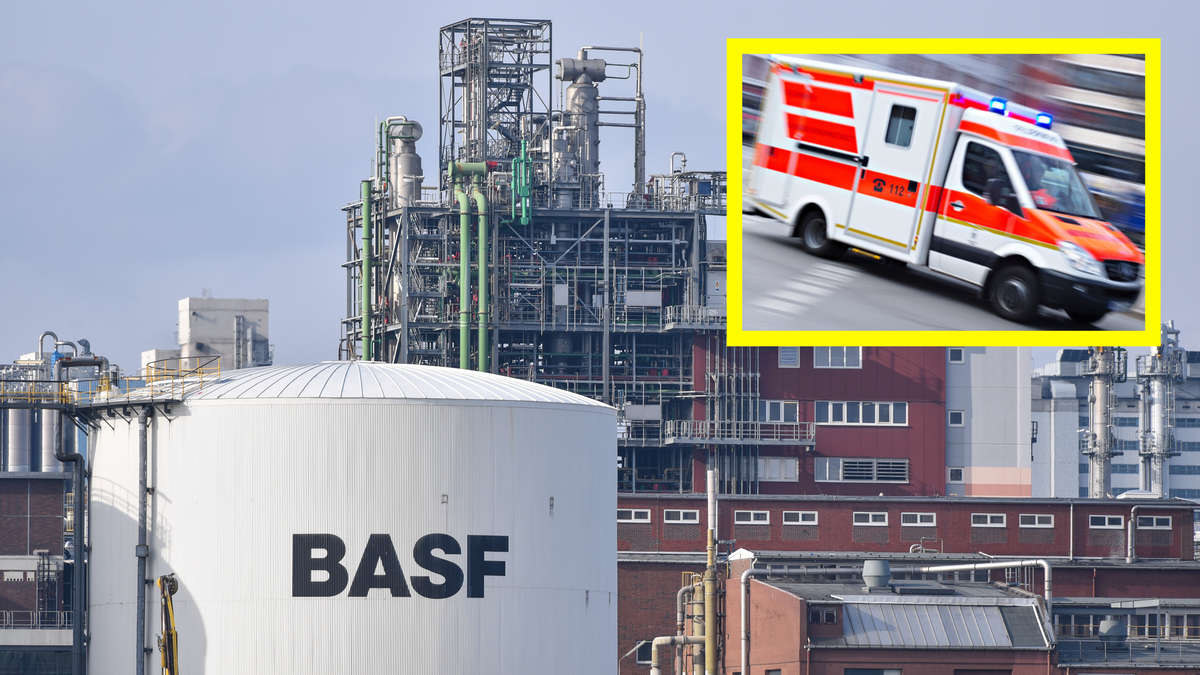
BASF Accidents: Multiple Employees Injured in Recent Incidents Spark Renewed Safety Focus
Recent industrial incidents at BASF’s major production sites in Germany have once again brought workplace safety into sharp focus. With several employees sustaining injuries in a series of events ranging from elevator shaft accidents to chemical burns and deflagrations, the global chemical giant is navigating the complexities of maintaining high safety standards across its vast operations. These incidents underscore the persistent challenges inherent in large-scale industrial environments and highlight the critical importance of robust safety protocols and continuous vigilance to protect workers. The concept of "basf unfall verletzt" – BASF incidents resulting in injuries – remains a pertinent concern for both the company and its workforce.
A Closer Look at Recent Workplace Incidents at BASF
The past months have seen several concerning events unfold at BASF facilities, leading to injuries among employees and external contractors. Each incident, while distinct in its cause and context, collectively draws attention to the ongoing need for rigorous safety measures.
One serious incident occurred at the Ludwigshafen site on a Monday afternoon, March 31st. An external employee, engaged in revision and assembly work within the South plant section, sustained severe injuries in an elevator shaft around 5:50 PM. The individual had to be rescued by the BASF plant fire department and, after receiving initial medical attention from BASF's rescue service, was transported to a hospital. Authorities were promptly informed, and investigations into the precise circumstances are undoubtedly underway. This event highlights the specific risks associated with maintenance work in confined or hazardous spaces and the necessity of stringent lockout/tagout procedures and rescue readiness.
Just months prior, on a Tuesday morning, January 27th, two BASF employees were injured at the Ludwigshafen Nord plant section. The incident, occurring around 10:00 AM, involved two individuals who were performing repair work on a pipeline when they suffered scalds from hot water. An emergency doctor treated the injured parties on-site before they were taken to a nearby hospital. The exact cause of this accident remains unclear, underscoring the dangers of working with high-temperature fluids and the importance of proper isolation and personal protective equipment (PPE). The reference context also notes a separate incident in July 2025 where a BASF employee was injured by acid, further illustrating the diverse range of chemical hazards present in such an environment.
Adding to these occurrences, four individuals were injured at the BASF plant in Lampertheim on a Monday morning around 8:30 AM due to a deflagration (a rapid combustion or explosion). The incident happened at a filter within the plant, which manufactures plastic additives. While the severity of the injuries was not specified, all four required hospitalization. The affected plant section was immediately shut down, and fortunately, no elevated measurements of hazardous substances were detected in or around the plant premises, indicating that the incident was contained. Deflagrations often highlight the need for careful material handling, process control, and explosion prevention strategies in facilities dealing with flammable materials. These incidents collectively underscore why
Multiple Injuries at BASF: From Scalds to Elevator Shaft Rescues remains a critical area of focus.
BASF's Commitment to Safety and Injury Prevention
As a global leader in the chemical industry, BASF has publicly outlined ambitious safety targets and demonstrated a commitment to reducing workplace accidents. The company's goal is to achieve a maximum of 0.05 High-Severity Injuries (HSI) per 200,000 working hours by 2030. HSI refers to injuries of a severe degree, emphasizing the prevention of life-altering harm. From 2023 onwards, the focus has been squarely on preventing severe injuries, with "the human being at the center" of their safety philosophy.
According to BASF's own figures, the company recorded a global HSI rate of 0.02 per 200,000 working hours in 2023, which suggests a significant effort to meet its safety objectives. However, this positive statistic for severe injuries stands in stark contrast to the tragic reality of two fatalities reported in the same year. One death occurred on a major construction site in Zhanjiang, China, while the other resulted from a traffic accident in Vietnam. These fatalities, though potentially distinct from typical industrial HSI metrics, serve as a somber reminder of the absolute imperative for comprehensive safety measures that extend beyond the immediate production environment to encompass all aspects of work-related activities.
Despite the occurrence of such tragic events and the recent spate of injuries, industrial operations must continue. This constant pressure to operate while maintaining the highest safety standards creates a complex environment for companies like BASF. The company is also undergoing a leadership transition, with the plant manager of its main facility slated to depart in 2025 after a decade of service. Such changes, while not directly related to safety incidents, are part of the broader operational context within which safety performance is managed. Given these dynamics,
BASF Workplace Safety Under Scrutiny After Latest Accidents remains an ongoing conversation.
Understanding Industrial Accidents: Causes and Prevention
Industrial accidents, particularly in complex chemical environments like BASF, rarely stem from a single cause. Instead, they often result from a confluence of factors, including:
* **Human Error:** This can range from momentary lapses in attention to incorrect procedures or shortcuts.
* **Equipment Malfunction:** Failures in machinery, pipelines, or safety systems can lead to critical incidents.
* **Process Deviations:** Unplanned changes in operational parameters or uncontrolled reactions.
* **Inadequate Training:** A lack of sufficient knowledge or practical experience to perform tasks safely.
* **Insufficient Safety Protocols:** Outdated, unclear, or unenforced safety regulations.
* **Poor Communication:** Gaps in relaying critical safety information among teams or shifts.
For the types of incidents observed at BASF, specific preventative measures are paramount:
* **Elevator Shafts & Confined Spaces:** Requires strict permitting systems, thorough risk assessments, atmospheric monitoring, lockout/tagout procedures for energy isolation, and specialized rescue teams.
* **Hot Water/Chemical Scalds:** Demands robust process isolation (e.g., proper valve closure, double block and bleed systems), regular integrity checks of pipelines and vessels, mandatory use of appropriate Personal Protective Equipment (PPE) such as chemical-resistant suits, gloves, and face shields, and comprehensive training on chemical properties and emergency response.
* **Deflagrations/Explosions:** Involves meticulous dust and gas management, explosion-proof equipment, inerting systems, detailed hazard analyses (HAZOP studies), and pressure relief systems.
**Practical Tips for Enhancing Industrial Safety:**
Implementing a proactive and comprehensive safety strategy is crucial for mitigating risks and preventing injuries. Key actionable advice includes:
1. **Continuous Training and Retraining:** Beyond initial onboarding, regular and specialized training on task-specific hazards, emergency procedures, and the correct use of PPE is vital. This should include simulations and practical drills.
2. **Robust Maintenance and Inspection Regimes:** Proactive maintenance schedules, condition monitoring, and timely repairs of all equipment, including safety systems, are non-negotiable. Regular audits help identify potential weaknesses before they lead to failures.
3. **Clear and Enforced Safety Protocols:** Safety procedures must be well-documented, easily accessible, understood by all employees, and consistently enforced. A 'no shortcuts' culture must be fostered.
4. **Effective Emergency Response Planning:** Comprehensive plans for various emergency scenarios, including medical emergencies, fires, chemical spills, and evacuations, are essential. Regular drills ensure that personnel are prepared to act quickly and effectively.
5. **Learning from Incidents and Near Misses:** Every incident, no matter how minor, and every near miss, should be thoroughly investigated to identify root causes. The lessons learned must be integrated into revised safety protocols and shared across the organization.
6. **Fostering a Strong Safety Culture:** Safety must be a shared responsibility from top management to the frontline worker. Employees should be empowered to report hazards without fear of reprisal and encouraged to participate actively in safety initiatives.
The Broader Impact and Future Outlook
The impact of workplace accidents extends far beyond immediate physical injuries. They can have profound psychological effects on employees, create distress for their families, and damage a company's reputation. For BASF, each incident prompts internal investigations and external scrutiny, driving the continuous quest for safer operations.
While the plant manager of the main Ludwigshafen site is set to conclude their tenure in 2025, the overarching commitment to safety remains a core value for BASF. The goal to minimize High-Severity Injuries and ensure a safe working environment is an ongoing endeavor that transcends individual leadership changes. The ability of such a vast chemical conglomerate to adapt, learn, and improve its safety culture will be critical in its continued success and its promise to its employees.
Conclusion
The recent incidents at BASF's German facilities, involving multiple employees sustaining injuries from various industrial hazards, serve as a powerful reminder of the inherent risks in large-scale chemical manufacturing. Despite ambitious safety targets and commendable progress in reducing certain types of severe injuries, these events underscore the relentless effort required to maintain an accident-free workplace. For BASF, and indeed for any industrial leader, the pursuit of "basf unfall verletzt" prevention necessitates unwavering dedication to continuous improvement, transparent investigation of every incident, and the empowerment of every employee to prioritize safety. By fostering a culture where safety is paramount, continuously refining protocols, and leveraging lessons from every challenge, the company can move closer to its goal of ensuring the well-being of its global workforce.